
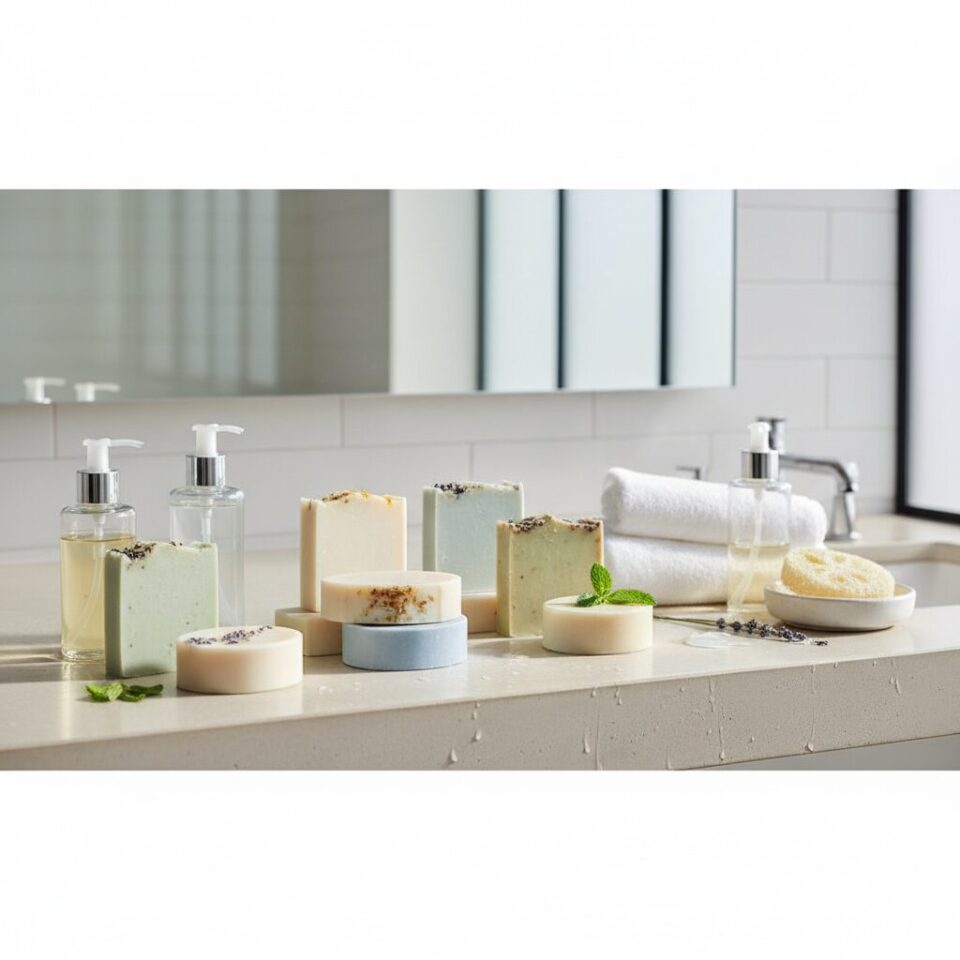
If you’ve ever picked up a bar of soap and thought, that smells exactly like clean — you’re not alone. That fresh, crisp, just-washed feeling is something most people chase without really knowing what creates it. Whether you’re exploring natural and organic soap bars for the first time or simply trying to understand what makes a soap smell genuinely clean rather than artificially perfumed, this guide breaks it all down in plain terms.
Clean smelling soap is one of those things that’s easy to recognize but harder to define. It’s not always floral, it’s not always citrusy, and it’s definitely not always the same for everyone. But there are consistent patterns — specific ingredients, scent families, and formulation choices — that tend to produce that universally satisfying “clean” impression.
Key Takeaways
- “Clean smelling” is a sensory perception shaped by fragrance families, cultural associations, and individual memory
- Fresh, aquatic, citrus, and light herbal scent profiles are most commonly associated with cleanliness
- Natural soaps scented with essential oils can smell just as clean as synthetic fragrance soaps — often more so
- The base oils used in soap-making affect how the scent performs and how long it lasts
- Harsh synthetic fragrances can irritate skin and disrupt the body’s natural balance
- A truly clean soap should smell fresh without being overwhelming or artificial like eucalyptus, peppermint, tea tree, and lemon are popular for their naturally clean scent profiles
- Personal preference and scent memory play a significant role in what each person perceives as “clean”
What Does “Clean Smelling” Actually Mean?
The idea of something smelling clean is deeply tied to psychology and memory. Researchers have found that our brains associate certain scents with cleanliness largely because of repeated exposure — the smell of bleach in a hospital, fresh laundry detergent, or the citrusy burst of a dish soap. These associations get baked into our perception over time.
In the soap world, “clean smelling” typically falls into a few recognizable scent categories:
- Fresh and aquatic: light, airy, slightly watery notes that feel crisp and cool
- Citrus: lemon, grapefruit, bergamot, and orange — bright and energizing
- Herbal and green: eucalyptus, peppermint, spearmint, and tea tree
- Soapy floral: light lavender or clean rose that doesn’t feel heavy or powdery
- Ozonic: a modern fragrance note that mimics the smell or rain
What’s interesting is that “clean” is rarely described as sweet, musky, or deeply woody. Those scent families tend to read as warm or sensual rather than fresh and clean. This is why a bar of soap with heavy vanilla or sandalwood notes might smell luxurious but won’t necessarily trigger that clean sensation.
Natural vs. Synthetic Fragrance: Which Smells Cleaner?
This is one of the most common questions people have when switching to natural personal care products. Synthetic fragrances are engineered to be powerful and long-lasting — and many of them are specifically designed to smell “clean.” Think of classic laundry-scented soaps or ocean mist body washes. They’re effective at creating that impression.
However, synthetic fragrance blends can contain dozens of undisclosed chemical compounds, some of which are known skin irritants or hormone disruptors. For people with sensitive skin, these can cause redness, itching, or contact dermatitis even if the soap smells pleasant.
Natural essential oils, on the other hand, offer genuine aromatic benefits alongside their scent. They’re derived directly from plants and tend to smell more nuanced and authentic. The tradeoff is that they can be less potent and may fade faster than synthetic alternatives.
Essential Oils That Smell Genuinely Clean
| Essential Oil | Scent Profile | Why It Reads as Clean |
|---|---|---|
| Eucalyptus | Cool, camphorous, slightly medicinal | Associated with cleanliness and clearing |
| Peppermint | Crisp, sharp, minty | Stimulating and refreshing |
| Lemon | Bright, tart, citrusy | Universally associated with freshness |
| Tea Tree | Earthy, medicinal, sharp | Antimicrobial association reinforces clean feeling |
| Bergamot | Citrusy, slightly floral | Light and energizing without being heavy |
| Spearmint | Softer than peppermint, herbal | Fresh without being harsh |
| Lavender | Floral, herbal, slightly sweet | Clean and calming when used in light concentrations |
If you’re building a natural skincare routine around products that smell fresh and feel wholesome, starting with soap that uses these essential oils is a smart move.
How Soap Base Ingredients Affect Scent
The fragrance isn’t the only thing that determines how a soap smells. The base oils used in cold process or hot process soap-making also contribute to the overall scent profile — and they affect how well the added fragrance performs.
Some oils have a strong natural smell that can compete with or muddy the added fragrance:
- Olive oil: mild, slightly grassy — generally neutral enough to work with most scents
- Coconut oil: light, slightly sweet — pairs well with citrus and tropical notes
- Castor oil: nearly odorless — used in small amounts to boost lather
- Shea butter: faintly nutty — can soften sharper scents
- Hemp seed oil: earthy and green — can clash with delicate floral scents
Soaps made with a high percentage of coconut oil tend to produce a clean, white lather and let the added fragrance shine through clearly. This is one reason many “clean smelling” soaps use coconut oil as a primary base.
Comparing Common Soap Types by Scent Character
| Soap Type | Typical Scent Profile | Fragrance Longevity | Best For |
|---|---|---|---|
| Cold process natural soap | Complex, authentic, can be earthy | Moderate | People who prefer genuine natural scents |
| Glycerin soap | Neutral, allows fragrance to stand out | Moderate to high | Sensitive skin, clear soap fans |
| Commercial bar soap | Strong, synthetic, consistent | High | Those who want powerful, lasting scent |
| Castile soap | Very mild, olive-forward | Low to moderate | Minimalists, sensitive skin types |
| Artisan essential oil soap | Nuanced, herbal, fresh | Moderate | Natural beauty Makes a Soap Smell ” Clean” or Artificial?
There’s a fine line between a soap that smells pleasantly fresh and one that smells like it was designed in a lab. Over-fragranced soaps — whether natural or synthetic — can feel overwhelming, and some people find heavily perfumed bars irritating to use daily.
Signs a soap may be over-fragranced or artificially scented:
- The scent is detectable from several feet away before you even open the packaging
- The fragrance lingers on skin for hours after washing
- You notice a chemical or “perfumey” undertone beneath the main scent
- The soap causes tingling, redness, or itching that isn’t from an active ingredient like peppermint
A well-formulated clean smelling soap should have a scent that’s present and pleasant during use, then fades to a subtle freshness on the skin. It shouldn’t announce itself before you’ve even lathered up.
For people with fragrance sensitivities, it’s worth exploring natural and organic skincare products that are formulated without added fragrance entirely — sometimes the cleanest smelling option is no added scent at all.
The Role of Scent Memory and Personal Preference
It’s worth acknowledging that “clean” is not a universal scent. What smells fresh and clean to one person might smell medicinal or overpowering to another. A lot of this comes down to scent memory — the personal associations your brain has built up over years of experience.
Someone who grew up using a particular brand of bar soap will often associate that exact smell with cleanliness, even if it contains synthetic musks and artificial fragrance compounds. Meanwhile, someone introduced to natural herbal soaps early on might find those same synthetic soaps to smell harsh or fake.
This is why finding your version of a clean smelling soap often involves a bit of trial and error. A few helpful strategies:
- Start with single-note soaps (just lemon, just peppermint) to understand what you actually like
- Smell the soap dry before buying, then again after lathering — they can be quite different
- Pay attention to how the scent wears on your skin, not just how it smells in the package
- Consider unscented options if you’re sensitive but still want a fresh feeling from the cleansing itself
If you’re also exploring fragrance in other areas of your routine, learning how to make your own natural perfume can give you a much deeper understanding of how scent notes work together.
Tips for Keeping Your Clean Smelling Soap Smelling Its Best
Even a beautifully scented soap can lose its fragrance quickly if it’s not stored properly. Here’s how to preserve the scent and quality of your bar:
- Keep it dry between uses: a well-draining soap dish prevents the bar from sitting in water, which dilutes and degrades the scent
- Store unused bars in a cool, dark place: light and heat accelerate fragrance evaporation
- Wrap bars in paper or cloth: breathable wrapping protects the scent without trapping moisture
- Avoid storing soap near strong-smelling products: soaps can absorb nearby odors over time
- Use natural soaps within 12 months: essential oilbased soaps have a natural shelf life and will smell best when fresh
These same principles apply when you’re thinking about [organizing your beauty products](https://www.thenaturalbeauty.blog/10-storage-ideas-to-keep-your-beauty-products- broadly — proper storage makes a real difference in how long your products perform.
Conclusion
Clean smelling soap is more than just a pleasant bar to wash with — it’s a sensory experience shaped by fragrance chemistry, base ingredients, personal memory, and skin compatibility. Understanding what creates that “clean” impression helps you make smarter choices, whether you’re looking for a gentle everyday bar or something with a more specific aromatic character.
The most important takeaways are simple: look for soaps scented with essential oils that naturally read as fresh (citrus, mint, eucalyptus), pay attention to the base oils and how they interact with the fragrance, and don’t underestimate the role your own scent preferences play in what feels clean to you. A soap that smells clean to you is the right soap for you — and with so many excellent natural options available, finding it is well worth the exploration.
Frequently Asked Questions
What scents are considered the cleanest smelling in soap?
Citrus scents like lemon and grapefruit, with eucalyptus, peppermint, and light lavender, are most commonly associated with a clean smell. These scents trigger freshness associations in the brain and are widely used in soaps marketed for their clean fragrance.
Is natural soap fragrance as strong as synthetic fragrance?
Generally, natural essential oil fragrances are less intense and may fade faster than synthetic fragrances. However, they tend to smell more authentic and are less likely to cause skin irritation or sensitivity reactions.
Can unscented soap still smell clean?
Yes. A high-quality unscented soap made with neutral base oils like coconut or olive oil can have a naturally mild, clean scent from the saponification process itself. Many people find this minimal scent profile very appealing.
Why does my soap smell different in the shower than it does in the packaging?
Heat, steam, and water all affect how fragrance molecules are released. Some scents bloom beautifully in warm water, while others can become more muted. This is why testing a soap in use is more informative than smelling it dry.
How long should a clean smelling soap retain its scent?
A well-made soap stored properly should retain its scent for 6 to 12 months. Soaps scented with synthetic fragrance oils typically last longer than those made with essential oils, which are more volatile and can fade over time.
This article was last updated on June 3, 2026 .