
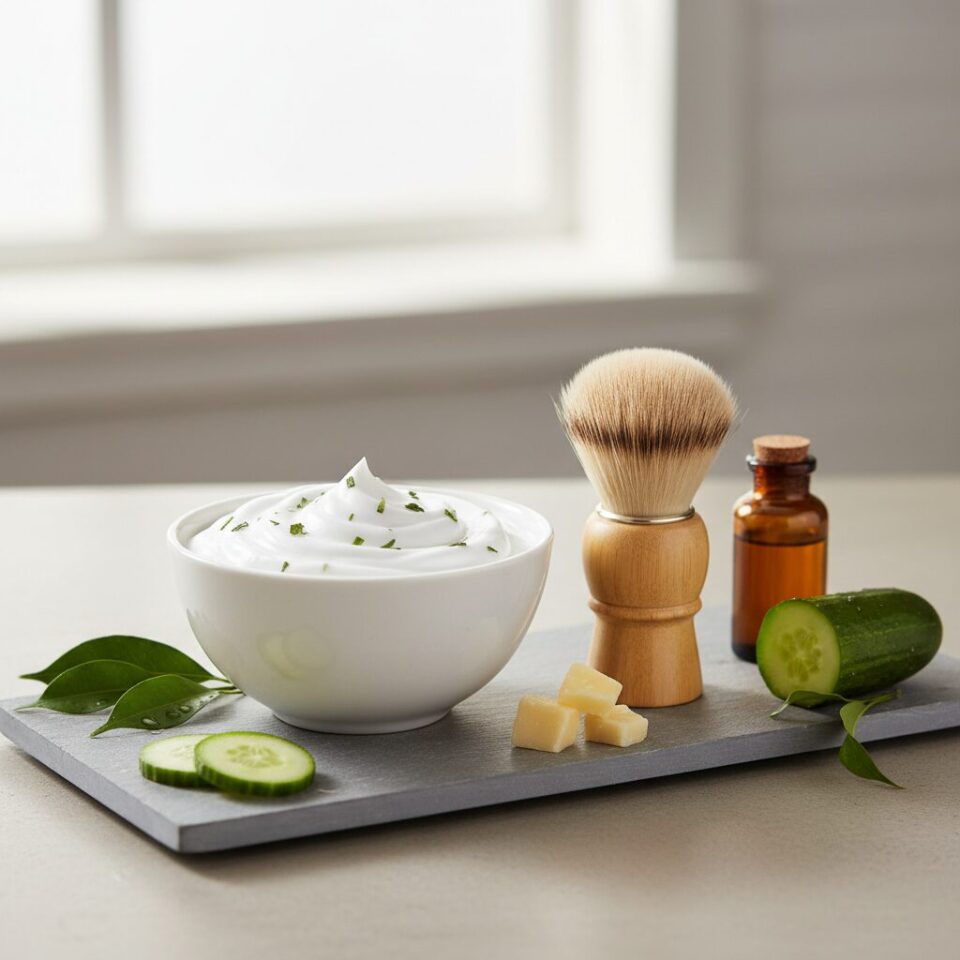
If you’ve ever flipped over a can of conventional shaving cream and tried to read the ingredient list, you know the feeling: a wall of chemical names that are difficult to pronounce and even harder to research. Organic shaving cream offers a different approach, one that prioritizes plant-based ingredients, transparent formulations, and skin-friendly results.
Whether you’re new to natural grooming or just curious about making a cleaner switch, this guide breaks down everything you need to know. For a curated list of top-rated options, check out The 10 Best Natural and Organic Shaving Creams before diving in.
Key Takeaways
- Organic shaving creams use plant-derived, naturally sourced ingredients instead of synthetic chemicals and propellants
- Common beneficial ingredients include shea butter, aloe vera, coconut oil, and essential oils
- Conventional shaving creams often contain parabens, artificial fragrances, and aerosol propellants that can irritate sensitive skin
- Organic options tend to be gentler on skin, making them a strong choice for people with sensitive or reactive skin types
- Reading ingredient labels carefully is the most reliable way to verify a product’s organic claims
- Certifications from organizations like USDA Organic or COSMOS Organic add an extra layer of trust
- Organic shaving creams work for all skin types and genders, not just those with specific skin concerns
What Does “Organic” Actually Mean in Skincare?
The word “organic” gets used a lot in the beauty world, but it doesn’t always mean the same thing. In the context of shaving cream, an organic product is one that uses ingredients grown without synthetic pesticides, herbicides, or genetically modified organisms. When a product carries a recognized certification, it means a third party has verified those claims.
However, not every product labeled “organic” is certified. Some brands use the term loosely to suggest natural origins without meeting any formal standard. This is why certifications matter. Look for labels like:
- USDA Organic (United States): Requires at least 95% certified organic ingredients
- COSMOS Organic (Europe): A rigorous standard covering both ingredients and manufacturing processes
- Ecocert: A French certification body widely recognized in the natural beauty industry
A product can also be partially organic, meaning some ingredients are certified organic while others are naturally derived but not certified. Understanding this distinction helps you make more informed choices when shopping.
What Is Organic Shaving Cream?
Organic shaving cream is a shaving preparation made primarily from plant-based, naturally sourced, and often certified organic ingredients. Unlike conventional aerosol shaving foams, which rely on synthetic surfactants, chemical preservatives, and pressurized propellants, organic shaving creams typically come in tube, jar, or pump formats and use gentler foaming agents derived from plants.
The core function is the same as any shaving product: to lubricate the skin, soften hair, and allow a razor to glide smoothly without causing irritation. What sets organic versions apart is how they achieve that function and what they leave behind on your skin afterward.
Organic shaving creams are often richer in skin-nourishing compounds, which means they don’t just prep your skin for shaving, they actively condition it during the process. This makes them particularly appealing for people with dry skin, sensitive skin, or those prone to razor burn.
Common Organic Shaving Cream Ingredients
Understanding the ingredients in your shaving cream is one of the most empowering steps you can take as a conscious consumer. Here’s a breakdown of the most common ingredients found in organic formulations and what each one does.
Plant Oils and Butters
These form the moisturizing backbone of most organic shaving creams:
- Shea butter: Rich in fatty acids and vitamins A and E, shea butter softens skin and reduces post-shave irritation
- Coconut oil: A natural emollient that creates a protective barrier on the skin while adding slip for the razor
- Jojoba oil: Closely mimics the skin’s natural sebum, making it excellent for balancing oil production
- Sweet almond oil: Lightweight and soothing, ideal for sensitive or reactive skin types
Aloe Vera
Aloe vera is one of the most widely used natural skincare ingredients for good reason. It hydrates, soothes inflammation, and helps calm skin that’s been aggravated by shaving. You can learn more about why it’s such a powerful ingredient in The 5 Benefits of Aloe Vera Gel for Your Skin.
Natural Surfactants and Foaming Agents
Conventional shaving foams use sodium lauryl sulfate (SLS) or similar harsh surfactants to create lather. Organic alternatives use gentler options such as:
- Coco glucoside: Derived from coconut and fruit sugars, it creates a mild foam
- Decyl glucoside: Another plant-derived surfactant that’s gentle enough for sensitive skin
- Saponified oils: Used in traditional shaving soaps and creams, these are oils that have been processed with lye to create a natural soap base
Essential Oils
Essential oils serve double duty in organic shaving creams. They provide natural fragrance and often carry their own skin benefits:
- Lavender: Calming and anti-inflammatory
- Tea tree: Antimicrobial, helpful for preventing post-shave breakouts
- Peppermint: Cooling and refreshing on the skin
- Eucalyptus: Invigorating and mildly antiseptic
Glycerin
Vegetable-derived glycerin is a humectant, meaning it draws moisture into the skin. It’s a common ingredient in natural formulations because it’s effective, gentle, and well-tolerated by most skin types.
Ingredients to Avoid in Conventional Shaving Creams
Knowing what to avoid is just as important as knowing what to look for. Many conventional shaving creams contain ingredients that can cause irritation, disrupt hormones, or contribute to long-term skin sensitivity.
| Ingredient | Common Concern |
|---|---|
| Parabens (methylparaben, propylparaben) | Potential endocrine disruption |
| Artificial fragrance / “parfum” | Can contain hundreds of undisclosed chemicals |
| Sodium lauryl sulfate (SLS) | Strips natural oils, irritates sensitive skin |
| Triethanolamine (TEA) | Can form harmful nitrosamines |
| Isobutane / propane (aerosol propellants) | Environmental concerns, potential skin irritant |
| Synthetic dyes | No functional benefit, potential allergen |
Switching to an organic shaving cream means sidestepping most or all of these ingredients, which is a meaningful upgrade for both your skin and your overall product load.
Organic vs. Conventional Shaving Cream: A Side-by-Side Look
| Feature | Organic Shaving Cream | Conventional Shaving Cream |
|---|---|---|
| Key ingredients | Plant oils, aloe, essential oils | Synthetic surfactants, parabens, propellants |
| Packaging | Tubes, jars, pumps | Aerosol cans |
| Fragrance source | Essential oils | Synthetic fragrance compounds |
| Skin feel after use | Nourished, conditioned | Sometimes dry or tight |
| Environmental impact | Generally lower | Higher (aerosol waste, synthetic chemicals) |
| Shelf life | Shorter (fewer preservatives) | Longer |
| Price point | Often higher | Usually lower |
This comparison highlights the genuine trade-offs. Organic shaving creams tend to cost more and have shorter shelf lives, but they offer a noticeably different skin experience and a cleaner ingredient profile.
Who Should Use Organic Shaving Cream?
The short answer: almost anyone. But organic shaving cream is especially worth considering if you:
- Have sensitive, reactive, or easily irritated skin
- Experience frequent razor burn or ingrown hairs
- Are managing a skin condition like eczema or rosacea
- Prefer fragrance-free or naturally scented products
- Are trying to reduce your overall exposure to synthetic chemicals
- Care about sustainability and eco-friendly packaging
Organic shaving cream is not just a product for people with specific skin concerns. Many people simply prefer the texture, scent, and ingredient transparency that comes with natural formulations. This is also true for both facial shaving and body shaving, making these products versatile across grooming routines.
If you’re building a broader natural grooming routine, it’s worth exploring Organic Beard Care Lines: Complete Routines for Every Beard Type and The 10 Best Natural and Organic Beard Oils for a more complete picture.
How to Use Organic Shaving Cream Effectively
Organic shaving creams, especially those in tube or jar form, are used a little differently than aerosol foams. Here’s a simple process to get the best results:
- Wet your skin thoroughly with warm water to soften hair and open pores
- Apply a small amount of cream to your fingertips or a shaving brush
- Work into a lather by massaging onto the skin in circular motions
- Shave with the grain of hair growth to minimize irritation
- Rinse well with cool water to close pores
- Follow with a natural moisturizer or aftershave balm to soothe skin
A shaving brush can significantly improve the performance of organic creams by creating a richer lather and lifting hairs away from the skin. It’s a small investment that makes a noticeable difference.
Popular Organic Shaving Cream Ingredients by Skin Type
Matching ingredients to your skin type helps you narrow down the right product more quickly:
- Dry skin: Look for shea butter, coconut oil, and glycerin for deep moisture
- Oily or acne-prone skin: Tea tree oil, jojoba oil, and lightweight plant extracts work well
- Sensitive skin: Aloe vera, chamomile extract, and fragrance-free formulations are your best bet
- Normal skin: Most organic formulations will work well; focus on ingredient quality and certification
For anyone navigating a broader natural skincare routine, Organic Skincare Routine Essentials: The Complete Guide to Natural Beauty is a helpful resource for understanding how individual products fit into the bigger picture.
Conclusion
Organic shaving cream is a meaningful upgrade from conventional options for anyone who values ingredient transparency, skin health, and a more thoughtful grooming routine. By replacing synthetic surfactants, artificial fragrances, and chemical preservatives with plant oils, aloe vera, and natural foaming agents, these products deliver a shave that’s both effective and genuinely skin-friendly.
The most important things to remember are to read ingredient labels carefully, look for recognized certifications when possible, and match the formulation to your skin type. Organic shaving cream isn’t a niche product for a specific type of person. It’s a practical, well-formulated alternative that works for a wide range of skin types and grooming preferences.
If you’re ready to explore specific products, The 10 Best Natural and Organic Shaving Creams is a great place to start comparing options.
Frequently Asked Questions
Is organic shaving cream better for sensitive skin?
Generally, yes. Organic shaving creams tend to avoid common irritants like synthetic fragrances, SLS, and parabens, which are frequent triggers for sensitive skin reactions. The inclusion of soothing ingredients like aloe vera and chamomile also helps reduce post-shave redness.
Does organic shaving cream lather as well as conventional foam?
It lathers differently rather than less effectively. Organic creams typically produce a creamier, denser lather rather than the airy foam of aerosol products. Using a shaving brush can help maximize lather and improve the overall shave.
Can women use organic shaving cream too?
Absolutely. Organic shaving creams are suitable for anyone who shaves, regardless of gender. Many formulations work equally well on legs, underarms, and facial hair.
How do I know if a shaving cream is truly organic?
Look for third-party certifications such as USDA Organic, COSMOS Organic, or Ecocert on the packaging. Reading the full ingredient list is also important since marketing terms like “natural” or “green” are not regulated.
Does organic shaving cream expire faster than conventional products?
It can, yes. Because organic formulations use fewer synthetic preservatives, they may have a shorter shelf life. Most products will include a “period after opening” symbol indicating how many months the product is good for once opened.
This article was last updated on June 4, 2026 .